


Inlays & Onlays | Buttercross Dental Practice
Buttercross Dental Practice

Inlays & Onlays at Buttercross Dental Practice

Inlays and onlays are custom-made restorations used when a tooth needs more support than a filling can provide but doesn't necessarily require a full crown. At Buttercross Dental Practice, we use this conservative approach to restore strength, function and appearance while preserving as much healthy tooth structure as possible.

If a tooth has been weakened by decay, a fracture or a failing filling, an inlay or onlay may provide a strong and long-lasting solution. Carefully designed to fit precisely within or over the damaged part of the tooth, these restorations offer more support than a standard filling while avoiding more extensive treatment where appropriate.
Conservative Care Tailored Restorations
What are inlays and onlays
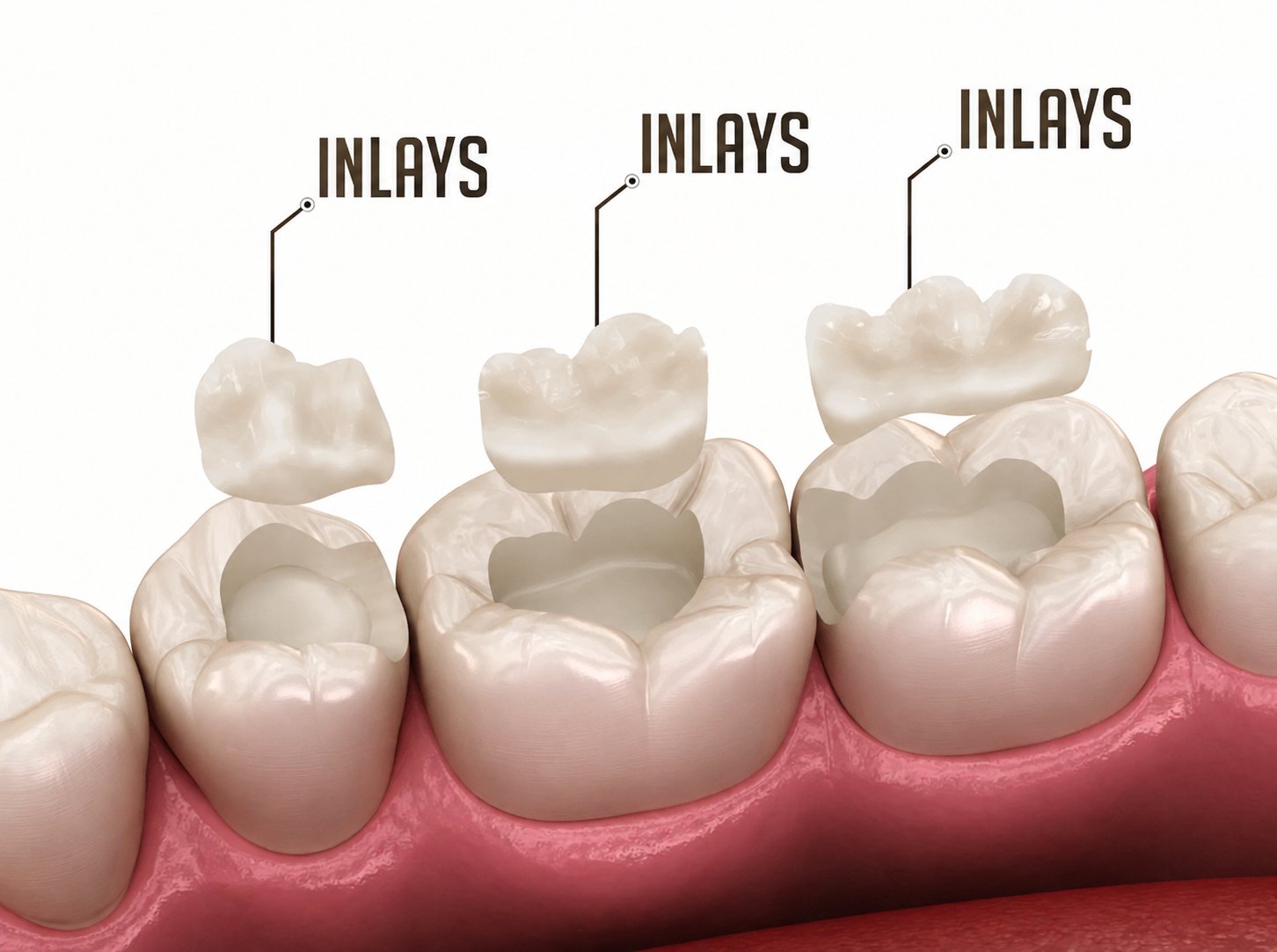
Both inlays and onlays are indirect restorations custom-made outside the mouth using a digital scan, then bonded securely into place at a later appointment. Unlike a traditional filling, they are not made directly in the tooth during a single visit.

What are Inlays and Onlays?

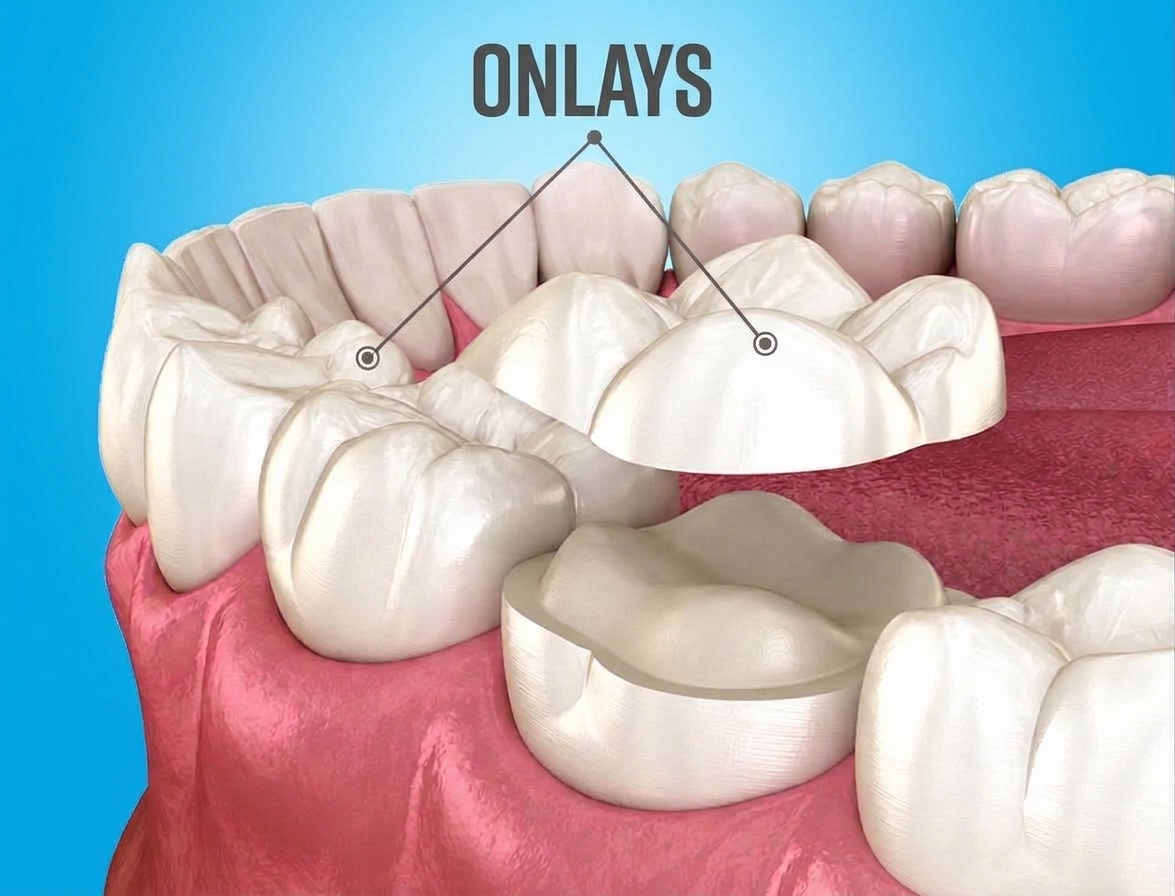
Inlays and onlays are sometimes described as indirect restorations. This means they are custom-made outside the mouth before being securely bonded into place.

An inlay fits within the biting surface of the tooth and is used when the damage is more limited. An onlay covers a larger area of the tooth, including one or more cusps, making it a good option when when extra protection is needed.

We may recommend an inlay or onlay if you need to:

  • Restore a tooth with moderate decay
  • Replace a large or failing filling
  • Repair a cracked or fractured tooth
  • Strengthen a weakened back tooth
  • Preserve more natural tooth structure than a crown may require

Inlays and onlays are commonly made from durable materials such as porcelain or composite, depending on the clinical requirements of the tooth and the desired appearance.

What does treatment involve?

Treatment begins with a thorough examination to assess your tooth and determine whether an inlay or onlay is the most suitable option. X-rays may be taken where clinically necessary to assess the tooth, its roots and the surrounding bone.

The tooth is then prepared by removing any decay, weakened structure or old filling material. Once the area has been cleaned and shaped, we use a digital scanner to capture a highly accurate three-dimensional image of the tooth. At Buttercross Dental Practice we replaced traditional dental impressions,using a digital work flow to make the process more comfortable, while providing the accuracy needed to create your custom-made restoration.

Your custom inlay or onlay is then made to fit precisely with your tooth and bite. A temporary restoration may be fitted if needed while the final restoration is being made.

At your next appointment, we'll carefully check the fit, appearance and your bite before securely bonding your new restoration into place.

🔬

Digital Scanning

We use a digital scanner to create a precise 3D image of your tooth, avoiding traditional impressions.

🦷

Custom-Made

Each inlay or onlay is individually made to fit your tooth and bite precisely.

✅

Secure Bonding

The fit and your bite are carefully checked before the restoration is securely bonded into place.

Benefits of Inlays and Onlays

Inlays and onlays can offer an excellent balance between strength and preserving healthy tooth structure.They are often recommended when a filling would not provide enough support, but a full crown would remove more healthy tooth tissue than necessary.

Some of the main benefits include:

  • A precise, custom-made fit
  • Stronger support for a damaged tooth
  • A natural appearance, with tooth-coloured materials
  • Preservation of more healthy tooth structure where appropriate
  • Greater durability than large fillings in suitable cases

Whether an inlay or onlay is the right option depends on the condition of your tooth, your bite, and your overall oral health.
Precise Custom-Made Fit
Strong Support Provided
Natural Tooth-Coloured Look
Regular Check-ups Recommended
Benefits of inlays and onlays

Arrange a consultation at Buttercross Dental Practice

If you have a damaged tooth or a large failing filling, we'd be happy to help. We'll carefully assess your tooth, explain whether an inlay or onlay is the right option, and recommend the most appropriate treatment for you.

Book Your Consultation

FAQ

1
What is the difference between an inlay or onlay and a filling?
A filling is placed directly into the tooth during a single appointment, whereas an inlay or onlay is custom-made before being bonded into place. Because it is individually made to fit your tooth, it can provide greater strength and support where a standard filling may not be sufficient. We'll recommend the most appropriate option based on the condition of your tooth.
2
How is an inlay or onlay different from a crown?
A crown covers the whole visible part of the tooth, whereas an inlay or onlay restores only the damaged section. This can make inlays and onlays a more conservative option in the right case. The choice depends on how much healthy tooth structure remains.
3
Are inlays and onlays suitable for front teeth?
They are most commonly used on back teeth, where biting forces are greater and additional strength is needed. Front teeth are often restored in different ways depending on the type and extent of the damage.
4
How long do inlays and onlays last?
They can last many years when they are well looked after and the surrounding tooth remains healthy. Their longevity depends on factors such as your bite, oral hygiene, diet, and whether you grind or clench your teeth. Regular dental examinations help monitor the restoration over time.
5
Can an inlay or onlay be used instead of a crown to save more of my tooth?
In some cases, yes. If a tooth needs more protection than a filling can provide but doesn't require full coverage, an inlay or onlay may be a suitable alternative. The aim is to strengthen and protect the tooth while preserving as much healthy tooth structure as possible.
6
Will my inlay or onlay feel natural when I bite?
Yes. Once your inlay or onlay has been adjusted and securely bonded into place, it should feel comfortable and natural when you bite. We'll carefully check your bite before your treatment is complete. If anything doesn't feel quite right afterwards, please let us know.
7
Can I have an inlay or onlay if I grind my teeth?
Possibly. This depends on the severity of the grinding and the condition of your tooth. Grinding places extra pressure on teeth and restorations, so we may recommend a custom-made night guard to help protect your teeth and reduce the risk of wear or fracture over time.

Practice Location:

Market Place, Bungay, Suffolk, NR35

Newsletter

Sign up to our newsletter