


Losing a single tooth can have more impact than many people expect. Whether the gap is visible when you smile or further back in the mouth, a missing tooth can affect confidence, chewing comfort and the way the surrounding teeth function over time. At Buttercross Dental Practice, we offer single tooth dental implant treatment as a long-term option for replacing an individual missing tooth in a way that looks natural and feels secure.
A single tooth implant is often considered when one tooth has been lost due to decay, gum disease, trauma, fracture or the need for extraction. In many cases, patients want a solution that does not rely on a removable denture and does not involve trimming down the healthy teeth on either side of the gap. Dental implants can offer that independence, replacing the missing tooth from the root upwards and helping to support both appearance and function.
As with any implant treatment, careful planning is essential. Not every patient is automatically suitable for an implant, and the best approach depends on factors such as bone support, gum health, bite forces and general oral health. Our role is to assess the area properly, explain your options clearly and recommend the most appropriate treatment for your individual needs.
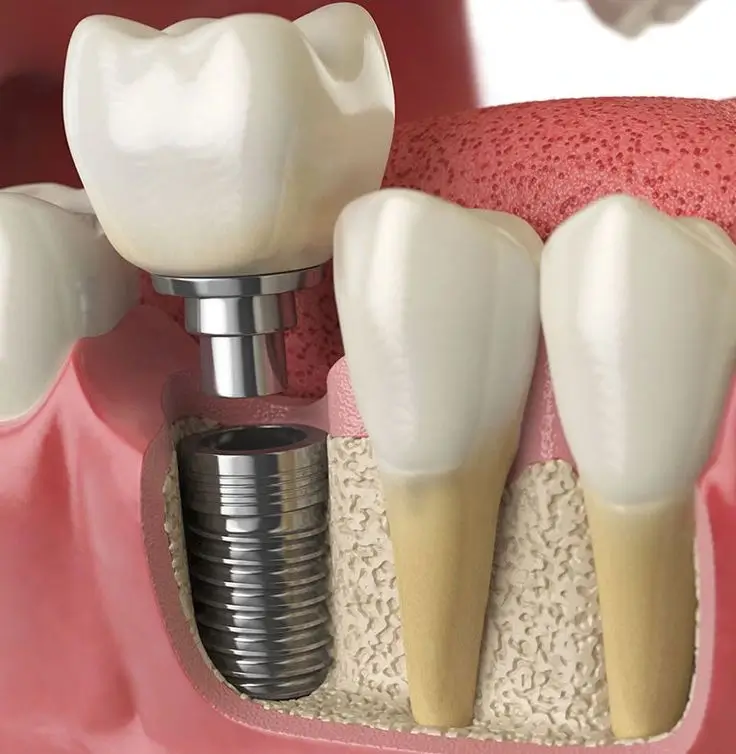
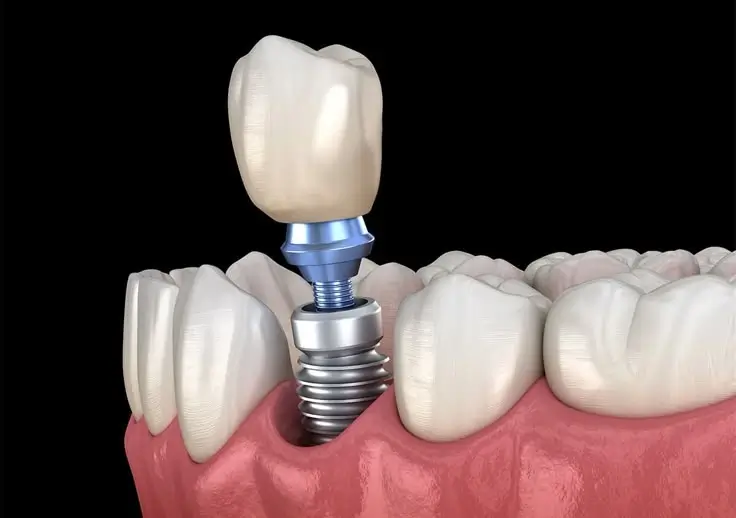
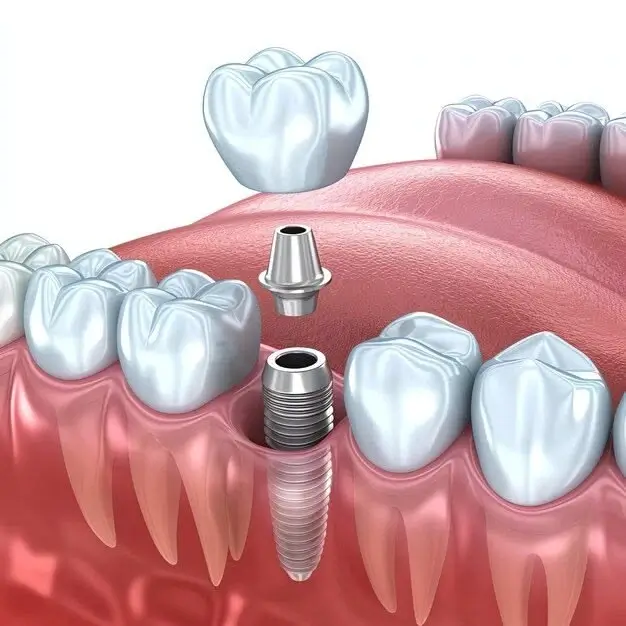
A single tooth implant is a restoration used to replace one missing tooth without attaching to the neighbouring teeth. It usually consists of three parts:
Which is placed into the jawbone and acts as an artificial tooth root.
Which connects the implant to the visible tooth replacement.
Which is designed to look and function like a natural tooth.
Once the implant has healed and integrated with the bone, the final crown is fitted on top. The aim is to create a tooth replacement that blends naturally with the rest of your smile while also restoring everyday bite function.
Because the implant is supported by the bone rather than adjacent teeth, it can be a conservative option in the right case. This means the neighbouring teeth do not usually need to be cut down in order to support the replacement, as they might with a conventional bridge.
Single tooth implants may be suitable in a range of situations where one tooth is missing or needs to be replaced.
Common reasons include:
Some patients seek treatment soon after losing a tooth, while others may have had the gap for many years. Both situations can potentially be treated, although long-standing gaps may involve more bone loss and may sometimes require additional planning or preparatory treatment.
Not every patient is immediately ready for implant treatment. Several factors influence whether a single tooth implant can be placed safely and predictably. These may include:
If bone loss has occurred, we may discuss whether bone grafting is needed before or during implant placement. If gum disease is present, it must usually be treated and stabilised first. The aim is always to build treatment on a healthy, stable foundation.
For suitable patients, a single tooth implant can offer several advantages over other tooth replacement options.
These may include:
Many patients also appreciate the psychological benefit of having a replacement tooth that feels secure and more like their own natural dentition. This can be particularly important when the missing tooth is towards the front of the mouth.
A dental bridge is another common way to replace a missing tooth. In many cases, a bridge can be a good option, but it works differently from an implant.
Placed independently into the bone and usually leaves the neighbouring teeth untouched. This independence can be a significant advantage, especially when the adjacent teeth are sound and free from large restorations.
Usually relies on the teeth on either side of the gap for support. These supporting teeth often need to be reshaped to carry crowns, even if they are otherwise healthy.
However, implants do involve surgery and require adequate bone and gum support, so they are not automatically the best choice in every case. During your consultation, we will explain the pros and limitations of each option based on your circumstances.
Your consultation at Buttercross Dental Practice begins with a detailed discussion about the missing tooth, your general dental health and what you would like to achieve from treatment. Some patients are mainly concerned about appearance, while others are more focused on comfort, chewing or avoiding a removable appliance.
We then carry out a careful clinical examination of the teeth, gums and bite. This allows us to assess the space available, the health of the neighbouring teeth, the condition of the gum tissues and whether the bite would place any unusual forces on an implant restoration.
Digital scanning may be used to create an accurate three-dimensional record of your teeth. We may also recommend X-rays or a CBCT scan if needed. These images help us assess the volume and quality of the bone, the position of nearby anatomical structures and the suitability of the area for implant placement.
Once all the necessary information has been gathered, we can explain whether a single tooth implant is suitable, whether any preparatory treatment may be needed, and what the treatment stages are likely to involve.
Although every case is different, single tooth implant treatment usually takes place in stages.
First, the implant is placed into the jawbone in the position of the missing tooth. A healing period then follows, allowing the implant to integrate with the bone. This process is important because it creates the stability needed to support the final crown.
Once healing is sufficiently advanced, the next step is to fit the final restoration. This is a custom-made crown designed to match the surrounding teeth as closely as possible in shape, shade and proportion. The result should feel secure, function comfortably and sit naturally within the smile.
In some cases, temporary restorations may be discussed during the healing phase, particularly if the missing tooth is in a visible area. The exact timeline varies depending on the condition of the site, whether extraction has recently taken place, and whether any additional procedures are required.
A well-planned implant restoration is designed to look as natural as possible, but the final appearance depends on more than just the crown itself. The surrounding gum shape, the position of the implant, the condition of the bone and the appearance of the neighbouring teeth all influence the cosmetic result.
This is especially important for front teeth, where even small differences in gum contour or tooth proportion may be noticeable. Careful assessment and planning help us achieve the most balanced and realistic outcome possible.
We will always discuss expectations honestly. In some cases, the cosmetic result can be excellent. In others, where bone or gum loss has already occurred, treatment may be more complex and may require additional procedures to improve support and appearance.
Dental implants cannot develop decay, but they still need careful maintenance. The gum and bone around an implant can become inflamed if plaque is allowed to build up, which may lead to complications over time.
Good aftercare includes:
Long-term success depends not only on the quality of the implant treatment itself, but also on how well the area is looked after afterwards. We provide clear advice on home care and ongoing maintenance so that your implant can remain healthy and functional for years to come.
If you have lost a tooth, are facing an extraction, or want to explore a fixed alternative to a bridge or denture, contact Buttercross Dental Practice to arrange a consultation for a single tooth implant. We will assess the area carefully, explain whether implant treatment is suitable, and guide you through the options available.
With digital planning, personalised assessment and a calm, professional approach, we help patients in Bungay and the surrounding area make informed decisions about replacing missing teeth. Where appropriate, a single tooth implant can provide a secure, natural-looking and long-lasting solution that supports both confidence and oral health.
Book a Consultation
Everything you need to know about single tooth implants at Buttercross Dental Practice.
Yes, the aim is to create a replacement tooth that blends as naturally as possible with the surrounding teeth and smile. The crown is custom-made to match the shape, shade and proportion of nearby teeth. The final cosmetic result also depends on the gum shape and bone support in the area.
Yes, a single implant can often be used to replace a front tooth. Careful planning is especially important in visible areas because the gum contour, tooth position and surrounding teeth all affect the final appearance. We will discuss expectations honestly during your consultation.
Digital scanning creates a detailed three-dimensional record of your teeth and gums. This helps us assess the space available, plan the implant position and design a crown that fits accurately. It supports a more precise and comfortable treatment process.
Implant placement is usually carried out under local anaesthetic, so you should not feel pain during the procedure itself. Afterwards, some soreness, swelling or bruising can happen while the area heals. We will explain what to expect and how to manage recovery.
Yes. Buttercross Dental Practice welcomes patients from Bungay and surrounding areas including Beccles, Halesworth, Harleston, Loddon and nearby villages. If you are missing one tooth, we can assess your suitability and talk you through the available options.
8A Market Place, Bungay, Suffolk. We welcome patients from Bungay, Beccles, Halesworth, Harleston, Loddon and the surrounding villages for single tooth implant consultations.