


The teenage years are a common time to start orthodontic treatment. At Buttercross Dental Practice, we offer Invisalign® consultations for teens as part of a careful, personalised approach to orthodontic care.

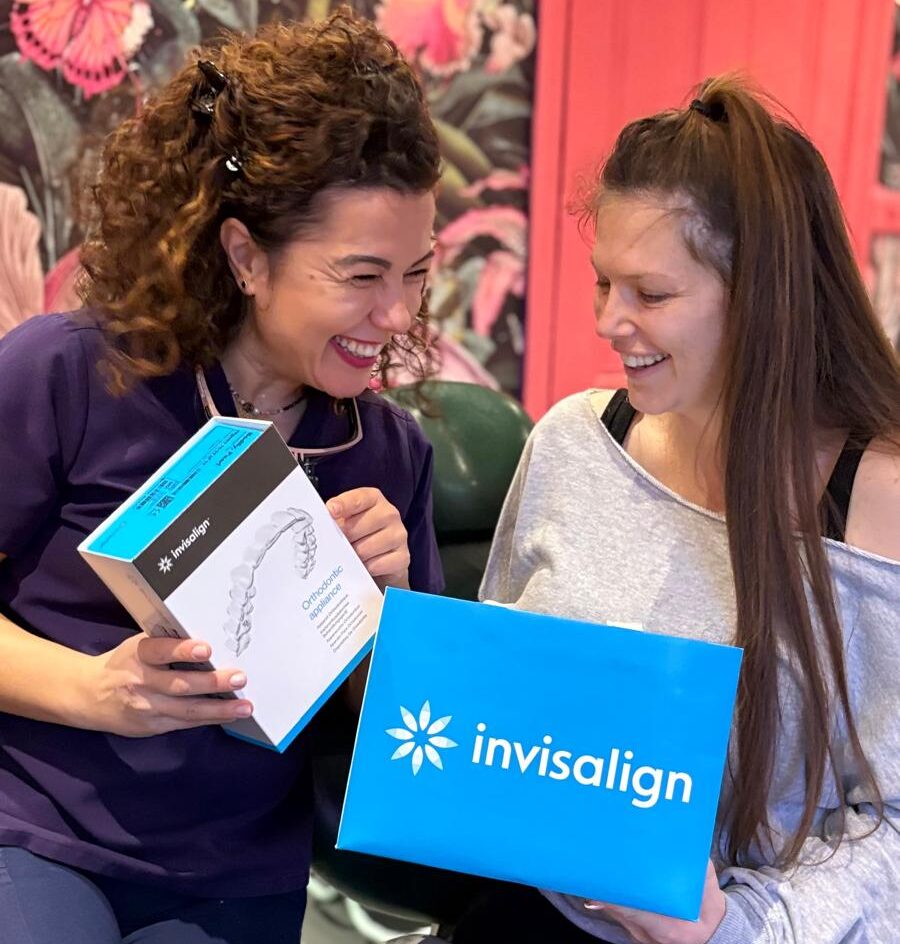
The teenage years are a common time to start orthodontic treatment. As the adult teeth settle into place, concerns such as crowding, gaps, bite problems or prominent teeth often become more noticeable. For many teenagers, the appearance of their smile can also begin to affect confidence in social situations, at school or in photographs. At Buttercross Dental Practice, we offer Invisalign® consultations for teens as part of a careful, personalised approach to orthodontic care, helping families understand the options available and whether clear aligner treatment may be suitable.
Invisalign® for teens can provide a discreet and flexible way to straighten teeth in selected cases. Many young people like the fact that the aligners are clear and removable, while parents often appreciate the structured treatment planning and the ability to maintain good oral hygiene more easily than with some fixed braces. However, Invisalign® is not the right solution for every teenager or every orthodontic problem. A proper assessment is essential to understand the position of the teeth, the way the bite fits together, and whether aligner treatment is likely to be effective and predictable.
That is why the consultation matters so much. We do not simply look at whether the teeth appear crooked. We assess the wider picture, including oral health, tooth development, bite function, gum health and long-term stability, so that any treatment recommended is based on sound clinical judgment rather than appearance alone.

Invisalign® for teens is a system of clear, removable aligners designed to move teeth gradually into improved positions over time. Each aligner is custom-made and worn in sequence, with each new aligner applying gentle pressure to guide tooth movement according to the treatment plan.
For teenagers, this can be an appealing alternative to traditional fixed braces. The aligners are less noticeable in everyday life, can be removed for eating and brushing, and may feel easier to manage in certain school, sports or social situations. However, because they are removable, they also require responsibility. Successful treatment depends on wearing them consistently for the recommended number of hours each day.
At Buttercross Dental Practice, we assess whether Invisalign® is suitable for the individual teenager in front of us. Some teens are excellent candidates because their orthodontic concerns are well suited to aligners and they are likely to follow the routine carefully. Others may be better served by fixed appliances or another treatment option, particularly where the bite is more complex or compliance is likely to be a concern.
The aligners are nearly invisible in everyday life, making them popular with teenagers who are conscious of their appearance.
Aligners can be removed for meals, snacks and drinks, and put back in after brushing — offering more flexibility than fixed braces.
Because aligners are removable, brushing and flossing is easier to maintain than with traditional fixed braces.
We assess each teenager individually to ensure Invisalign® is the right option for their specific orthodontic concerns.
Invisalign® for teens may be suitable for a range of mild to moderate alignment and bite concerns. A proper assessment is always essential.
Crowded teeth where there is not enough space for the teeth to align properly, crooked or overlapping teeth, rotated teeth, and teeth that have erupted in an uneven position may all be treatable with Invisalign® for teens.
Spacing or gaps between teeth, protruding upper front teeth, mild to moderate overbite, mild underbite in selected cases, crossbite affecting one or more teeth, and open bite in some cases may also be suitable for treatment.
Relapse after previous orthodontic treatment where teeth have shifted again after braces, and bite irregularities that affect smile appearance or function, may also be addressed. Some more complex problems may require another approach or specialist referral.

Many families begin to explore orthodontic treatment once most or all of the adult teeth have erupted and the alignment concerns are easier to assess. The teenage years are often an appropriate time because growth is still ongoing, but the teeth are developed enough for detailed planning.
A consultation may be worth arranging if your teenager has noticeably crowded or overlapping teeth, visible spaces or gaps between teeth, teeth that look twisted, rotated or out of line, upper front teeth that stick out significantly, a bite that does not seem to meet evenly, difficulty cleaning between crooked teeth, or a history of previous braces followed by movement of the teeth.
Concerns about smile appearance and confidence, or signs of wear caused by the way the teeth meet together, are also good reasons to seek an assessment. Even if the issue seems minor, it can be helpful to have it assessed properly. In some cases, early advice can prevent a more complicated problem later. In others, reassurance and monitoring may be all that is needed for the time being.
A thorough and carefully structured assessment to ensure the most appropriate advice for every teenager.
We begin with a discussion with the teenager and, where appropriate, their parent or guardian, about concerns, goals and any worries about treatment.
We carry out a thorough clinical examination including the teeth, gums, bite, jaw function and general oral health before any treatment begins.
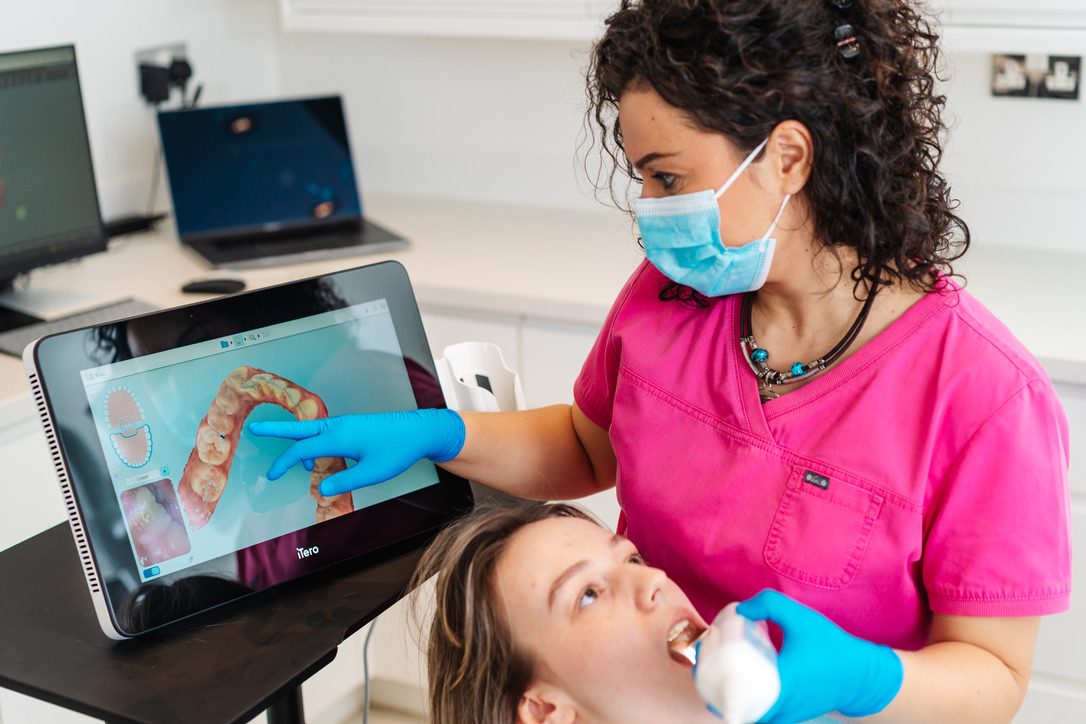
We use digital scanning to create a highly accurate three-dimensional image of the teeth, without the need for traditional impressions — more comfortable for teenagers.
Where needed, photographs and X-rays help us assess root positions, developing wisdom teeth, bone levels and the overall structure of the bite.
Invisalign® can be a very good option for many teenagers, but not every teen is suited to removable aligner treatment. Understanding suitability is essential.
The success of Invisalign® relies heavily on cooperation. Aligners usually need to be worn for around 20 to 22 hours a day unless advised otherwise.
Aligners must be removed for meals, snacks and drinks other than water, and put back in after brushing. Losing or forgetting aligners can delay treatment.
Many teenagers are highly motivated and manage aligners very well. The key is whether the individual is ready for the routine and understands the responsibility involved.
Some types of tooth movement are more predictable with fixed braces, especially in more complicated cases. We will explain clearly and honestly if another option is more suitable.
More severe crowding, complex bite discrepancies, impacted teeth or significant jaw-related problems may require another orthodontic approach or specialist referral.
Our role is to recommend what is most appropriate, not simply what may seem most appealing at first glance. We will always be straightforward about what we find.
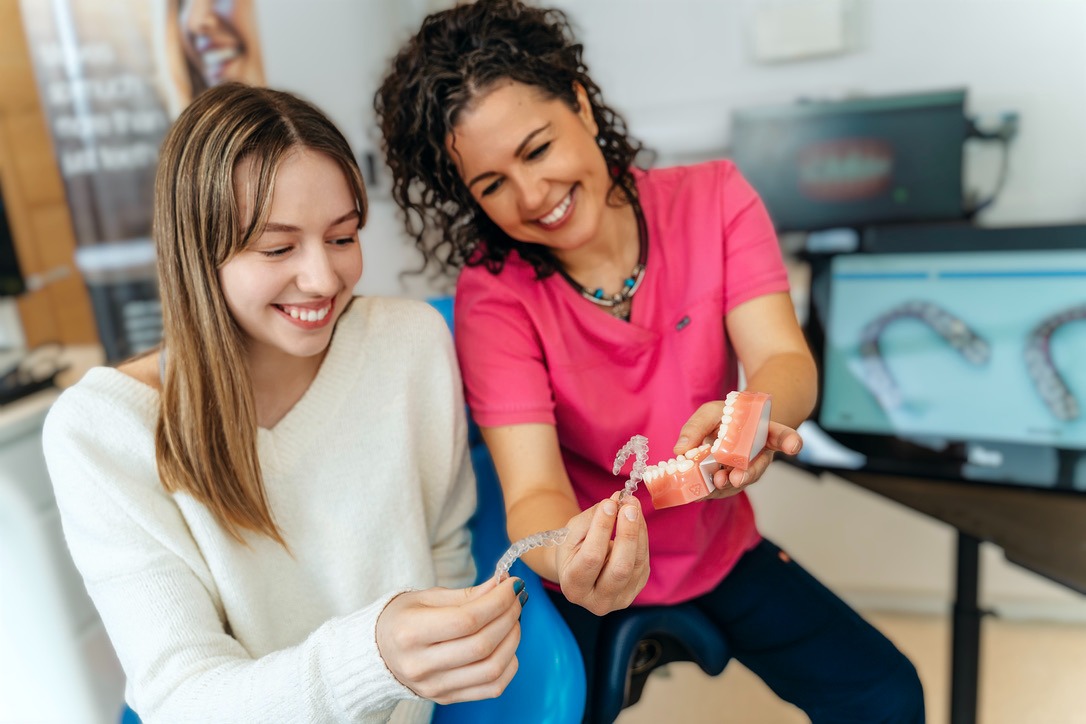
For the right patient, Invisalign® offers several benefits that can make orthodontic treatment feel more manageable and less intrusive in daily life.
Many teenagers appreciate being able to smile with more confidence during treatment. Because the aligners are removable, there are also fewer food restrictions compared with traditional braces. That said, removability is only an advantage when the aligners are worn as instructed.
No metal brackets or wires — the aligners are nearly invisible during everyday life.
The ability to remove aligners for eating means fewer food restrictions compared with fixed braces.
Maintaining oral hygiene is easier than with fixed braces, reducing the risk of decay or gum problems during treatment.
Digital planning and careful treatment monitoring throughout the process for precise, predictable results.
Smooth aligners that may feel more comfortable for some patients compared with metal brackets and wires.
Greater flexibility for sports, music and social events — aligners can be removed when needed.
Invisalign® for teens requires commitment. Wearing the aligners inconsistently can delay treatment, affect results and sometimes lead to the need for extra aligners or revisions. They also need to be cleaned properly and stored safely when removed.
Teenagers should also understand that aligners do not improve tooth colour, tooth shape or existing restorations. If cosmetic concerns remain after alignment, additional treatments such as whitening or composite bonding may sometimes be discussed once orthodontic treatment is complete and the bite is stable.
Some cases may also require small tooth-coloured attachments to be placed on the teeth to help the aligners grip more effectively. In certain situations, very small adjustments between teeth may be needed to create space for movement. If either of these is recommended, we will explain it clearly before treatment begins.
Consistent WearAligners must be worn for the recommended number of hours each day — usually around 20 to 22 hours unless advised otherwise.
Remove for Food & DrinkAligners must be removed for meals, snacks and drinks other than water, and reinserted after brushing teeth.
Safe StorageAligners need to be stored safely when removed — wrapping them in a napkin at lunchtime is a common way aligners are lost accidentally.
Regular CleaningAligners need to be cleaned properly and regularly to keep them clear, fresh and comfortable throughout treatment.
Oral Hygiene ThroughoutGood brushing and flossing habits must be maintained throughout treatment to protect the teeth and gums.
Retainers After TreatmentRetainers are usually needed after treatment to help maintain the result and protect the investment made in straightening.
Good oral hygiene is especially important during Invisalign® treatment. Because the aligners sit closely over the teeth for much of the day, plaque and food debris should not be trapped underneath them. Teenagers should brush twice daily with fluoride toothpaste and clean between their teeth every day. It is also important to brush after meals before putting the aligners back in.
Routine dental examinations remain important throughout treatment. We continue to monitor the health of the teeth and gums, not just the alignment. If a teenager already struggles with brushing, this needs to be addressed early so that treatment does not increase the risk of decay or gum problems.
Once the active alignment stage is complete, retainers are usually needed to help maintain the result. Teeth can shift back over time if they are not retained properly, even after successful orthodontic treatment. We explain retention carefully so that both teenager and parent understand that finishing the aligners is not quite the end of the process. If the teenager has any habits such as clenching or grinding, we may also discuss how these could affect long-term stability and whether any protective appliance may be helpful.
A selection of patient results from Buttercross Dental Practice, showing what can be achieved with careful, personalised orthodontic treatment.





If your teenager is concerned about crowded teeth, gaps, bite problems or the general appearance of their smile, contact Buttercross Dental Practice to arrange an Invisalign® consultation. We will assess the teeth carefully, identify any orthodontic concerns, and explain whether Invisalign® or another option may be the most suitable approach.
With digital scanning, personalised planning and a calm, no-pressure style of care, we aim to help teenagers and their families make informed decisions with confidence. Where Invisalign® is appropriate, it can offer a discreet and effective way to improve both smile appearance and dental alignment while supporting long-term oral health.
At Buttercross Dental Practice, we understand that orthodontic treatment can feel like a big decision for both teenagers and their families. We take time to listen, explain and answer questions without pressure.
Our goal is to help every teenager and their family understand the options available, feel confident in the decision they make, and receive the care and support they need throughout treatment and beyond.
Whether Invisalign® is the right choice or another approach is recommended, our commitment is to provide honest, clinically sound advice based on each individual's needs — not simply what may seem most appealing at first glance.
If your teenager is concerned about crowded teeth, gaps, bite problems or the general appearance of their smile, contact Buttercross Dental Practice to arrange an Invisalign® consultation. We will assess the teeth carefully, identify any orthodontic concerns, and explain whether Invisalign® or another option may be the most suitable approach.
With digital scanning, personalised planning and a calm, no-pressure style of care, we aim to help teenagers and their families make informed decisions with confidence. Where Invisalign® is appropriate, it can offer a discreet and effective way to improve both smile appearance and dental alignment while supporting long-term oral health.
Clear answers to the questions we hear most often about Invisalign® for teens at Buttercross Dental Practice.