


When several teeth are missing, the effect on your daily life can be considerable. You may find it harder to chew comfortably, notice changes in the way you speak, or feel less confident about the appearance of your smile. At Buttercross Dental Practice, we understand that replacing multiple missing teeth requires careful planning and a personalised approach. The goal is not simply to fill the gaps, but to restore comfort, function and confidence in a way that feels natural and secure.
Multiple dental implants can provide a fixed, stable solution for patients who want a longer-term alternative to removable dentures or traditional bridges. Because implant treatment is carefully planned from the start, it can be tailored to suit your mouth, your oral health and your treatment goals. We use digital scanning rather than traditional impressions, helping to make the process more accurate and comfortable.
Multiple dental implants are small titanium posts placed into the jawbone to replace more than one missing tooth. These implants act like artificial tooth roots and provide support for custom-made restorations. Depending on your needs, multiple implants may support:
For several missing teeth in a row, supported securely by implants placed in the jawbone.
To replace separate missing teeth, each supported by its own implant for maximum stability.
A larger fixed restoration for more extensive tooth loss, providing a secure and natural result.
Because the implants are anchored in the bone, they provide a stable foundation for replacement teeth. This helps them feel more secure during everyday activities such as eating and speaking.
There are several ways to replace missing teeth, including bridges and removable dentures. For suitable patients, multiple implants can offer important advantages. These may include:
Many patients appreciate the reassurance of having replacement teeth that feel more like their own. This can make day-to-day life feel easier and more predictable.
Your consultation begins with a detailed discussion about your dental history, general health and treatment goals. We will ask which teeth are missing, how long they have been absent, whether you have any difficulty chewing or speaking, and what you hope to achieve from treatment.
Next, we carry out a thorough examination of your teeth, gums and bite. This helps us assess the condition of your mouth and the health of the surrounding tissues.
We also use digital scanning to create a precise three-dimensional record of your teeth and gums. This avoids the need for messy traditional impressions. In some cases, we may also recommend X-rays or a CBCT scan to assess the amount of bone available and to plan the safest implant positions.
Once we have all the information we need, we will explain whether implant treatment is suitable, what type of restoration may be best, and whether any preparatory treatment is required first.
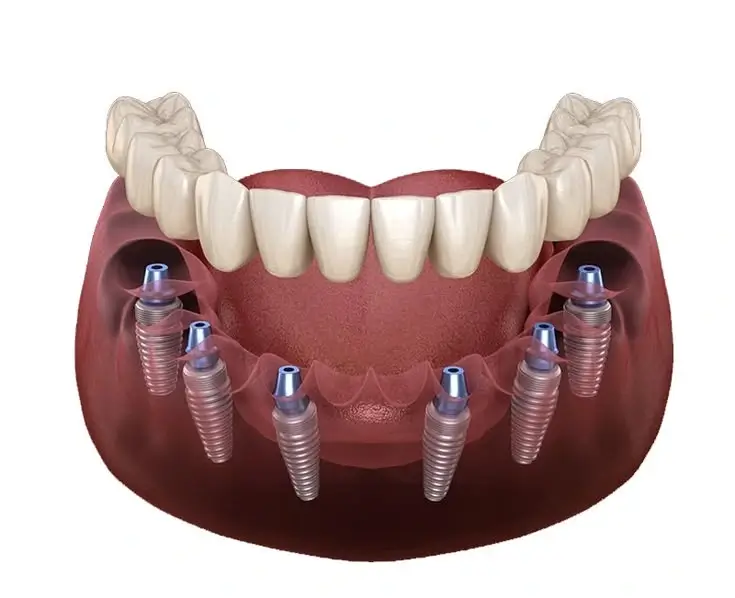
Although every case is different, treatment with multiple dental implants usually takes place in stages.
The treatment is carefully planned using the digital information gathered during your consultation, ensuring precise and safe implant positioning.
The implants are placed into the jawbone under local anaesthetic. After this, a healing period is needed so the implants can integrate with the bone.
This is an important stage, as it provides the long-term stability required to support the final restoration. Temporary restorations may be used during this phase if needed.
Once healing is complete, further digital records are taken so the final crowns or bridge can be designed and made to fit accurately, matching the surrounding teeth as closely as possible.
Several factors can influence whether multiple dental implants are the right option for you. These may include:
If teeth have been missing for a long time, some bone shrinkage may already have occurred. In some cases, bone grafting or another preparatory procedure may be recommended before implant placement can begin. If gum disease is present, this will usually need to be treated first.
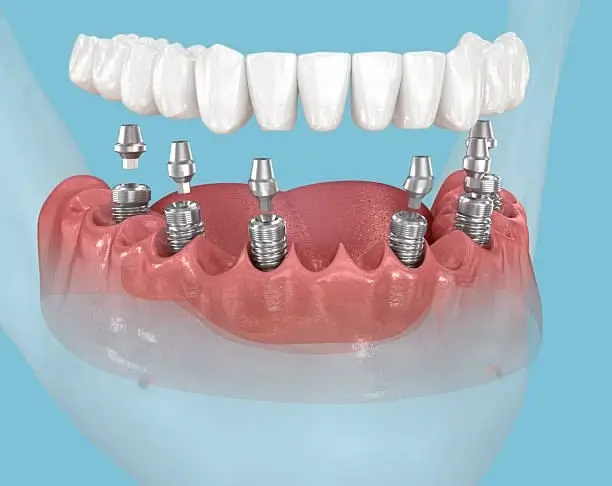
A conventional bridge usually relies on the teeth next to the gap for support. In some cases, those teeth need to be reshaped so the bridge can be fitted. This can be a suitable option, but some patients prefer a treatment that does not involve altering healthy teeth.
Removable partial dentures are another option. These sit against the gums and can be taken out for cleaning. While they may be appropriate in some situations, they can feel less stable and may move slightly while eating or speaking.
Multiple dental implants are different because they are supported directly by the jawbone. This gives them a secure foundation and can help preserve the surrounding bone and gum structure over time.
Both implants and traditional alternatives can restore missing teeth, but they work in very different ways.
Supported directly by the jawbone, providing a secure, fixed foundation. They help preserve the surrounding bone and gum structure and do not rely on neighbouring teeth for support.
Rely on adjacent teeth or the gums for support. They may require reshaping of healthy teeth or can feel less stable, and do not prevent jawbone loss in the same way over time.
During your consultation, we will explain the pros and limitations of each option based on your individual circumstances.
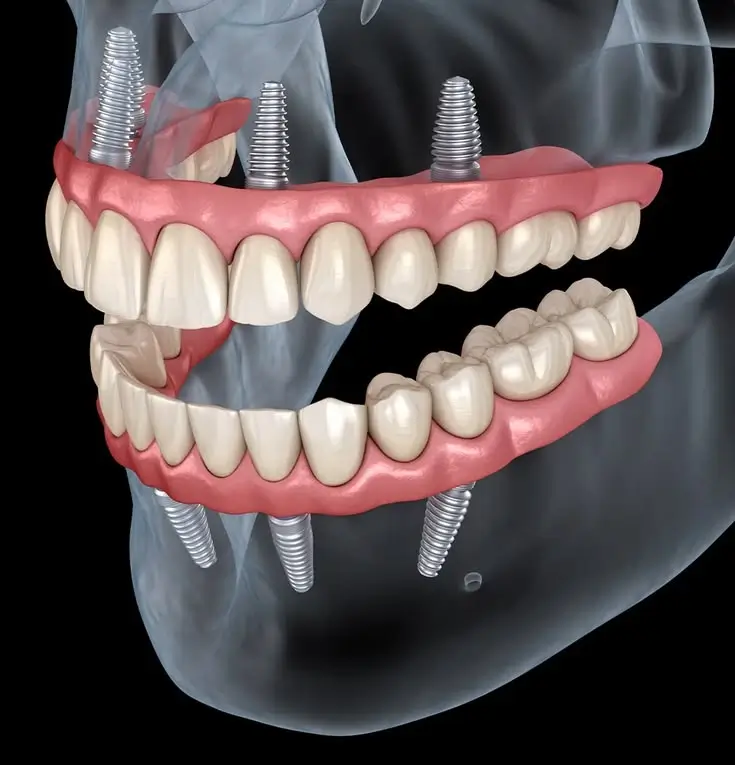
Dental implants need careful daily care to stay healthy and successful over time. Although implants do not decay, the gums and bone around them can still become inflamed if plaque is allowed to build up.
Good maintenance includes:
Ongoing care is essential for the long-term success of implant treatment. Regular check-ups help us monitor the health of the surrounding tissues and make sure everything continues to function properly.
If you are missing several teeth and would like to explore a secure, long-term alternative to bridges or dentures, contact Buttercross Dental Practice to arrange a consultation. We will assess your mouth carefully, explain your options clearly and help you understand whether multiple dental implants are right for you.
With digital planning, personalised care and a calm, professional approach, we help patients in Bungay and the surrounding area make informed decisions about replacing missing teeth. Where appropriate, multiple dental implants can provide a stable, natural-looking solution that supports comfort, confidence and long-term oral health.
Book a Consultation
Everything you need to know about multiple dental implants at Buttercross Dental Practice.
A conventional bridge is usually supported by the teeth next to the gap, which may need to be prepared. Multiple implants are supported directly by the jawbone instead, so healthy neighbouring teeth can often be left untouched. This can make implants a more conservative long-term option in suitable cases.
Yes, the aim is to create replacement teeth that blend naturally with your smile, bite and facial features. The final restorations are custom-made to match the surrounding teeth as closely as possible. Careful planning helps achieve a result that looks balanced and realistic.
Implant placement is usually carried out under local anaesthetic, so you should not feel pain during the procedure itself. Afterwards, some soreness, swelling or bruising is normal for a short time. We will explain what to expect and how to manage recovery.
Treatment usually takes place over several stages, with healing time needed after the implants are placed. The overall timeline depends on your individual case and whether any preparatory treatment is required first. Your dentist will give you a clearer estimate after your assessment.
The aim is to restore a strong, stable bite so you can eat more comfortably and confidently. Many patients find fixed implant restorations feel far more secure than removable options. During healing, however, you may need to follow temporary dietary advice.
They are designed to support normal speech and may improve clarity if missing teeth or loose dentures have been causing difficulty. Because implant restorations are fixed and stable, many patients find speaking feels more natural. There may be a short adjustment period at first.
Yes. Buttercross Dental Practice welcomes patients from Bungay and surrounding areas including Beccles, Halesworth, Harleston, Loddon and nearby villages. If you are missing several teeth, we can assess your suitability and talk you through the available options.
8A Market Place, Bungay, Suffolk. If you are missing several teeth and would like to explore multiple dental implants as a long-term solution, we welcome patients from Bungay, Beccles, Halesworth, Harleston, Loddon and the surrounding villages.